Kenya Real Estate Market Trends 2026
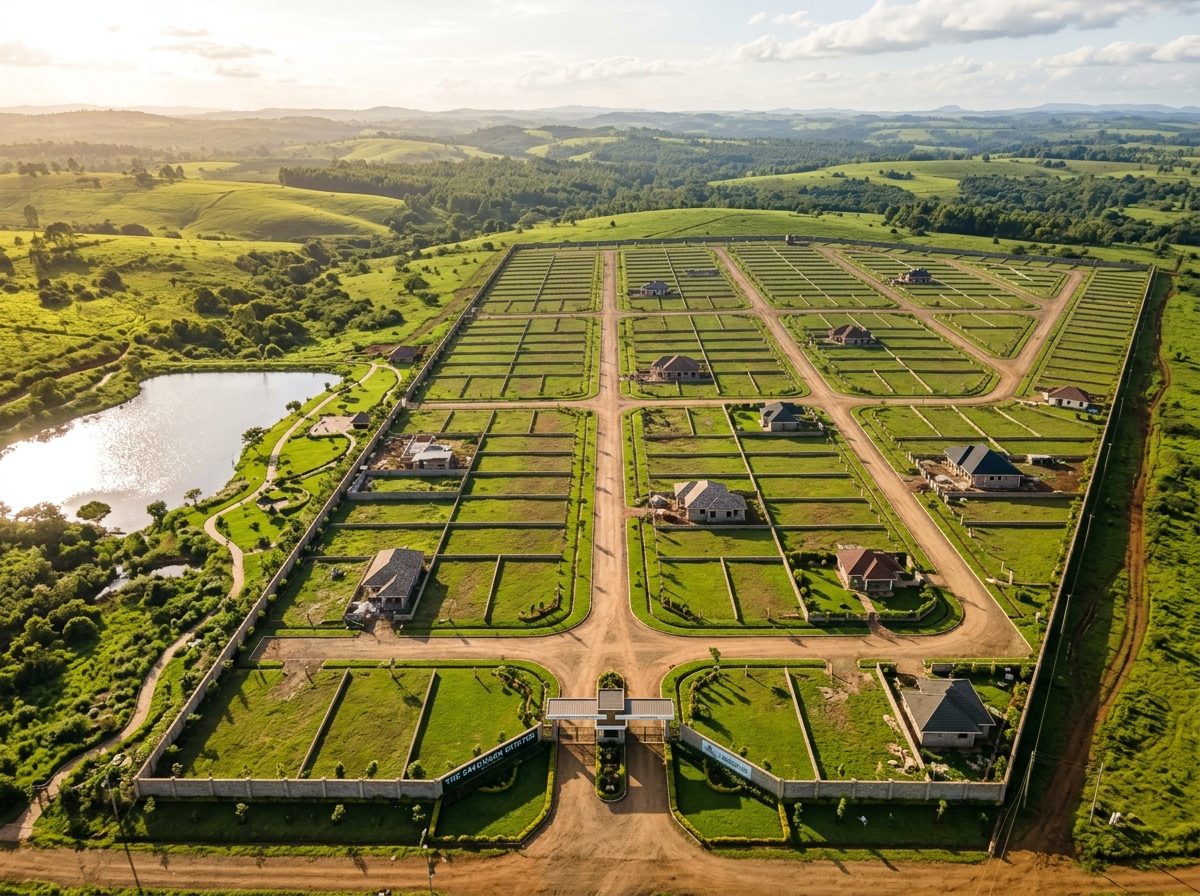
Kenya's real estate market continues to shift outward from Nairobi's core into a ring of satellite towns, driven by improved road infrastructure, rising urban population and buyers looking for more land for their money. Here is what we are seeing across the market heading into the second half of 2026, and what it means for anyone buying land or property today.
1. Growth Corridors Around Nairobi
Several towns within commuting distance of Nairobi continue to see the strongest demand and price growth:
- Kitengela, sustained demand driven by its proximity to the SGR, the Nairobi–Namanga road and ongoing infrastructure upgrades, popular for both plots and gated developments.
- Ruiru, one of the fastest-growing satellite towns, benefiting from the Thika Superhighway, expanding university and industrial presence, and a wave of apartment and gated community developments.
- Joska, increasingly popular for affordable plots aimed at first-time land buyers, with steady infrastructure improvement drawing new subdivisions.
- Thika, an established industrial and commercial hub along the superhighway, offering a mix of commercial, residential and industrial land opportunities.
- Konza, anchored by the Konza Technopolis project, positioning the area for long-term growth as ICT and business park development matures.
These corridors share common drivers: improved road access, proximity to Nairobi's job market, and relatively lower entry prices compared to buying within the city itself.
2. Rising Demand for Gated Communities
Security, shared amenities and predictable neighbourhood standards continue to push buyers toward gated developments rather than standalone plots in open areas. Buyers increasingly value perimeter security, controlled access, communal green spaces and consistent building standards across a development, factors that also support stronger long-term resale value. Developers have responded by structuring more mid-sized gated communities (20–200 units) rather than only large master-planned estates, making the model accessible to a broader range of buyers.
3. The Shift Toward Mixed-Use Developments
Especially in fast-growing towns, developers are increasingly combining residential, retail and light commercial space within a single development. This mixed-use approach reduces the need for residents to travel for everyday shopping and services, and it improves a development's income potential for investors who want rental commercial units alongside residential plots or apartments. Expect this trend to accelerate in corridor towns as populations grow dense enough to support ground-floor retail.
Land Price Appreciation by Area
While figures vary by exact location and proximity to tarmac roads, broad annual appreciation trends in 2025–2026 have looked roughly like this:
- Established corridor towns (Ruiru, Kitengela), steady appreciation, generally in the high single digits to low double digits annually for well-located plots.
- Emerging corridor towns (Joska, parts of Konza's periphery), faster percentage growth off a lower base, reflecting early-stage infrastructure investment.
- Industrial/commercial corridors (Thika), appreciation tied closely to commercial and industrial activity, with strong demand for larger commercial plots.
As always, appreciation is uneven even within the same town, parcels closer to tarmac roads, schools and planned infrastructure consistently outperform those further off the beaten path.
"Buyers who focus on infrastructure trajectory, where the next road, school or water project is headed, tend to outperform those who simply follow current price levels."
4. Outlook and Predictions
Looking ahead, we expect the following themes to define the Kenyan property market through the rest of 2026 and into 2027:
- Continued outward expansion of Nairobi's commuter belt as road and rail infrastructure improves.
- Growing buyer sophistication, more first-time buyers now insist on title searches and surveyor verification before purchasing, a positive shift for market transparency.
- Increased institutional and diaspora investment in gated and mixed-use developments, supporting steadier price growth in well-managed projects.
- Continued strong demand for flexible payment plans, as buyers prioritise manageable monthly commitments over lump-sum purchases.
For buyers and investors, the fundamentals remain consistent: verified title, strong location fundamentals (roads, water, proximity to growth nodes) and a trusted seller with a transparent track record continue to matter more than short-term price movements. Landplan.co.ke tracks these corridor trends closely across our land listings, so our clients can buy ahead of the curve rather than after prices have already run up.